Projects with Silent Computers
For a long time, the sound of a computer was defined by its cooling system. Spinning fans, constant airflow, and the background hum of machines running day and night were simply part of the experience. Today, things are a little different. Improvements in processor efficiency and low-power architectures have made it possible to build surprisingly capable systems that operate completely silently.
One of the reasons I enjoy working with SBCs and ARM-based platforms is that many of them can be passively cooled while still handling everyday workloads with ease. This opens up interesting possibilities for building compact, reliable, and energy-efficient systems without the complexity of active cooling. Whether it is a travel router, a small home server, or an always-on automation system, these devices can deliver plenty of performance while remaining completely silent.
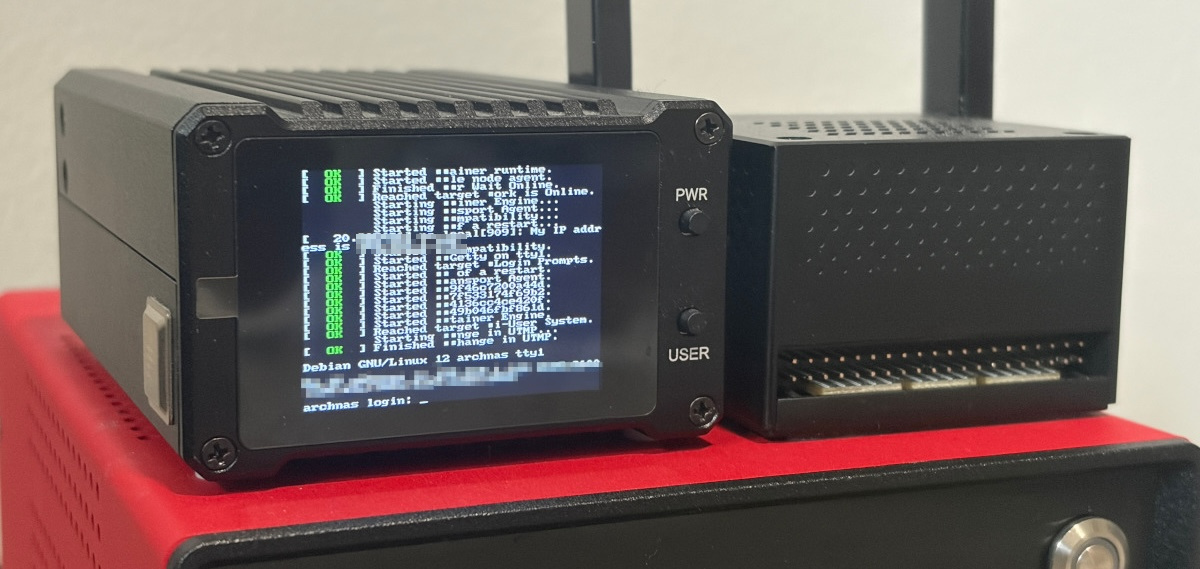
My homelab setup, built entirely around passively cooled systems.
This project series documents a collection of my passive-cooled SBC (Single-Board Computer) and low-power computing projects, focused on building efficient, silent, and reliable systems for everyday and always-on workloads. As a baseline requirement, all of my SBC projects are designed to run multiple Docker containers simultaneously without active cooling.
- Routour🗼: Building the Ultimate Travel Router
- Upgrading a Raspberry Pi CM4
- Hosting Your Own Memories with Immich
- psuctl🔌: Desktop PSU Controller for Raspberry Pi
When designing these projects, I consider several factors. The most important one is the final package size of the device. I like to utilize the smallest amount of space possible while still keeping the system practical and serviceable. The next consideration is cooling. One of the main reasons I enjoy working with ARM processors is their lower TDP, which often allows us to get away with passive cooling. This, in turn, helps reduce the overall size and complexity of the design (I know, I mentioned this earlier!).
To satisfy both of these requirements, many of these projects involve reflow and surface-mount soldering. That said, in my opinion, if compact packaging is removed from the equation, many of these systems can still be built without advanced soldering techniques. At the end of the day, the goal is to explore practical, low-noise computing solutions that remain accessible to enthusiasts, makers, and homelab builders alike.